




























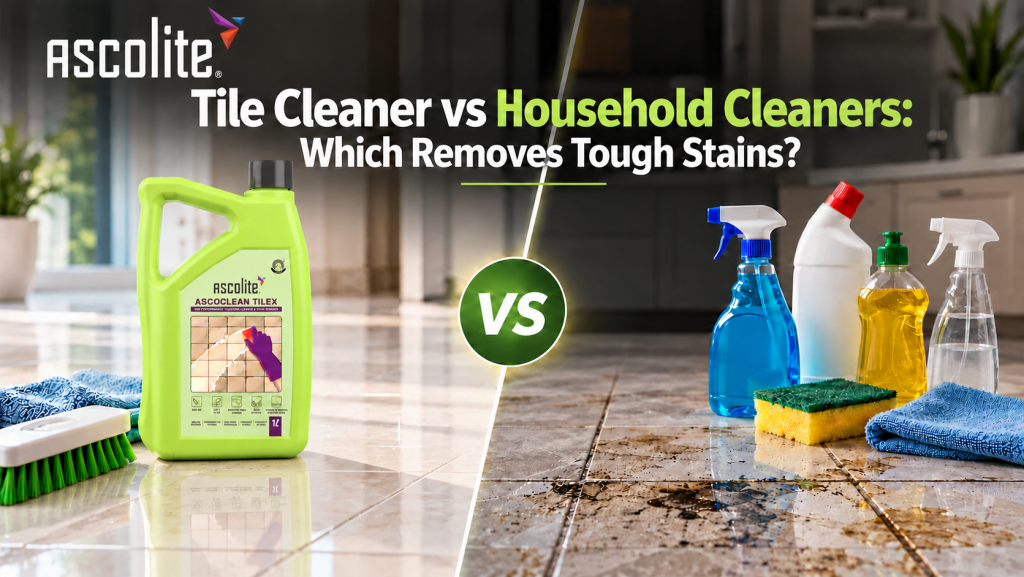
Tile Cleaner vs Household Cleaning Products: What Should You Use on Stubborn Tile Stains?
October 21, 2026
Clean tiles can make a big difference to the appearance of a home or commercial space. Whether it is a bathroom, kitchen, living room or office, well-maintained tiles contribute to a cleaner and more attractive environment.
However, keeping tiles spotless is not always easy. Regular foot traffic, soap residue, cooking spills, dirt and everyday use can leave behind stains that become difficult to remove. While many people turn to common household cleaning products, these may not always deliver the desired results.
This raises an important question: Should you use regular household cleaning products or a specialised tile cleaner to remove stubborn tile stains?
The answer depends on the type of stain, tile material and cleaning method. Understanding these factors can help you clean tiled surfaces effectively without unnecessarily damaging their finish.
In this guide, we explore the differences between household cleaning products and specialised tile cleaners, their applications, and how to choose the right cleaning solution.
1. Why Do Tiles Develop Stubborn Stains?
Tiles are widely used in residential, commercial and industrial spaces because of their durability, appearance and ease of maintenance. However, even well-installed tiles can develop stains over time.
Some stains remain on the surface, while others become trapped in textured finishes, porous materials or tile joints.
Common causes of tile stains
- Dirt and dust accumulation
Floors exposed to regular foot traffic collect dust, mud and fine particles. Without proper cleaning, this dirt can build up, particularly on textured tiles.
- Soap scum and bathroom residue
Bathrooms are frequently exposed to soap, shampoo, body oils and moisture. These substances can leave deposits on tiles and grout joints.
- Oil and grease stains
Kitchen tiles may develop greasy deposits from cooking activities, food spills and airborne oil particles. These stains can become more difficult to remove when left untreated.
- Hard water deposits
Water containing dissolved minerals can leave white or cloudy deposits on bathroom tiles, shower walls and sanitaryware.
- Construction and renovation residue
After tile installation or renovation, surfaces may contain dust, adhesive marks, grout residue and other construction-related deposits. Different residues require different cleaning approaches, and some hardened materials may need specialised removal methods.
- Dirt accumulation in tile joints
Tile joints can collect dirt and cleaning residues. Cementitious grout may also absorb moisture and stains depending on its formulation and condition.
Identifying the cause of staining is the first step towards choosing an appropriate cleaning method.
2. What Are Household Cleaning Products?
Household cleaning products are commonly used for everyday maintenance. These include mild floor-cleaning liquids, dishwashing detergents, general-purpose surface cleaners and other products intended for routine cleaning.
They are convenient and widely available, making them a practical choice for regular household use.
When household cleaners work well
Household cleaning products are generally useful for:
-
Removing light dust and surface dirt.
-
Cleaning fresh food spills.
-
Managing minor grease deposits.
-
Maintaining tiles between deeper cleaning sessions.
-
Cleaning compatible tile surfaces that do not have stubborn stains.
For example, a suitable pH-neutral cleaner may be sufficient for routine maintenance of many ceramic and porcelain tile surfaces.
However, not every household cleaner is appropriate for every tile material.
Limitations of household cleaning products
- Limited effectiveness on stubborn stains
Some everyday cleaners are formulated primarily for general surface maintenance. They may struggle with mineral deposits, persistent discolouration or certain accumulated residues.
- Different chemical formulations
Household cleaners can contain acids, alkalis, abrasives or other ingredients. Using an unsuitable formulation may damage sensitive tiles, grout or protective coatings.
- Repeated cleaning may be necessary
Persistent stains may require additional cleaning effort, particularly when the cleaning product is not designed for that type of deposit.
- Potential residue buildup
Using excessive detergent or failing to rinse properly can leave a film that attracts dirt and makes tiles appear dull.
Household cleaners are therefore useful for routine maintenance, but they are not automatically the best choice for every cleaning problem.
3. What Is a Specialised Tile Cleaner?
A specialised tile cleaner is formulated for particular tile-cleaning requirements, such as removing persistent surface stains, accumulated dirt or residues from compatible tiled surfaces.
Unlike a general-purpose household cleaner, a tile-cleaning product may be designed for specific substrates, deposits or cleaning conditions.
However, specialised tile cleaners are not all the same. Their chemical composition, strength and surface compatibility can vary considerably.
Benefits of choosing an appropriate tile cleaner
- Targeted stain removal
A suitable tile cleaner can help remove stains and deposits that are difficult to address through routine cleaning.
- Cleaning tile joints
Certain formulations are suitable for cleaning grout joints where dirt and staining have accumulated.
- Application across different spaces
Depending on the product specification, specialised cleaners may be suitable for residential bathrooms, kitchens, commercial floors and other tiled areas.
- Surface compatibility
A cleaner selected for the correct tile material and used according to its instructions can help maintain the intended surface appearance.
For effective cleaning, always match the product to the surface and type of stain rather than assuming that a stronger cleaner will provide a better result.
4. Tile Cleaner vs Household Cleaning Products: Key Differences
Understanding the practical differences can help homeowners, contractors and facility managers choose an appropriate cleaning solution.
Cleaning purpose
Household cleaning products are generally convenient for routine maintenance and light surface dirt.
Specialised tile cleaners may be more appropriate when the cleaning requirement involves persistent stains, deposits or specific tile and grout cleaning applications.
Stain-removal performance
A household cleaner may remove fresh spills and everyday dirt effectively.
A specialised cleaner formulated for a particular stain may offer better results when a general cleaner is ineffective. However, performance depends on the formulation, surface and stain type.
Surface suitability
Both household and specialised cleaners can damage surfaces when used incorrectly.
For example, acidic cleaners may damage acid-sensitive natural stones, while abrasive cleaning methods may scratch certain finishes.
Checking product compatibility is therefore essential.
Cleaning frequency
Suitable mild household cleaners can be used for regular maintenance according to the tile manufacturer’s recommendations.
Specialised cleaning products are generally selected when a specific cleaning problem requires additional treatment. Their frequency of use should follow the manufacturer’s guidance.
Overall cleaning approach
The most effective approach is not necessarily to replace every household cleaner with a specialised product.
Instead, use a suitable routine cleaner for everyday maintenance and select a compatible specialised cleaner when persistent staining requires additional attention.
5. Introducing ASCOCLEAN TILEX: A Tile Cleaning Solution from Ascolite
For surfaces affected by persistent tile stains, selecting a product designed for tile-cleaning applications can be useful.
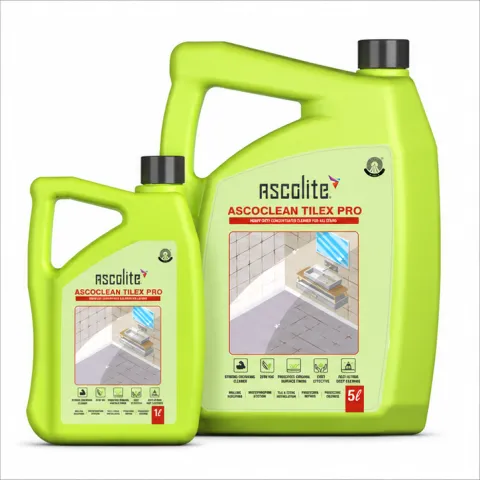
ASCOCLEAN TILEX from Ascolite is a high-performance, single-component tile cleaner developed for cleaning compatible tile surfaces and tile joints.
According to Ascolite’s official product information, ASCOCLEAN TILEX features a solvent-free formulation with zero volatile organic compounds (VOCs) and is designed to remove persistent stains from ceramic tiles and tile joints.
Key features of ASCOCLEAN TILEX
- Effective stain removal
The product is designed to address persistent stains on ceramic tiles and tile joints.
- Solvent-free formulation
ASCOCLEAN TILEX is described by Ascolite as a solvent-free cleaner with zero VOCs.
- Suitable for multiple applications
Its documented compatible substrates include tiles, glass mosaic, brick, tile and stone joint grout, sanitaryware and specific types of stone.
- Interior and exterior use
The product is specified for domestic, commercial and industrial applications, both indoors and outdoors.
- Surface finish considerations
Ascolite lists preservation of the original surface finish among its product benefits. However, users should verify compatibility with the actual surface before applying it across a larger area.
For more information about product specifications and applications, explore the ASCOCLEAN TILEX product page.
6. How to Use ASCOCLEAN TILEX for Stubborn Tile Stains
Using the correct application method is important for effective cleaning.
The following process reflects Ascolite’s published technical guidance. Always refer to the latest Technical Data Sheet (TDS) before application.
Step 1: Inspect the tile surface
Identify the tile material, stain type and surface condition.
Check for damaged grout, loose tiles, sensitive finishes or protective coatings that may be affected by cleaning.
Before proceeding, test ASCOCLEAN TILEX on a small, inconspicuous area to assess compatibility and cleaning results.
Step 2: Prepare the surface
Remove loose dust and debris with a clean cloth or suitable cleaning tool.
Prepare the surface according to the current product instructions. Avoid applying the cleaner to an excessively wet area.
Step 3: Apply the tile cleaner
Apply ASCOCLEAN TILEX using a suitable brush, roller or cloth mop, as specified in the product instructions.
For stubborn spots or layers, Ascolite’s technical guidance describes undiluted application, subject to a successful compatibility test.
Step 4: Allow the recommended contact time
The available ASCOCLEAN TILEX technical guidance specifies allowing the product to remain on the cleaning area for approximately 5–7 minutes.
Follow the latest TDS for the exact procedure and avoid allowing the cleaner to dry on the surface unless expressly permitted.
Step 5: Clean and rinse
Clean the affected area using an appropriate brush or cleaning equipment.
Rinse and mop the area twice with clean water, as described in the technical guidance. Remove the rinse water using a mop, sponge or wet vacuum as appropriate.
Step 6: Inspect the results
Allow the surface to dry and check the cleaning results.
If staining remains, reassess the deposit and surface condition before repeating treatment. Not all stains can be removed using the same cleaning product.
Ascolite’s technical guidance also recommends an application temperature range of 5°C to 45°C.
Important safety note: ASCOCLEAN TILEX contains mild organic acid and other chemical additives according to its published technical information. Avoid eye contact and prolonged skin contact, use suitable protective equipment, and never mix it with bleach or other cleaning chemicals. Zero VOC and solvent-free do not mean that protective precautions are unnecessary.
7. Common Tile Cleaning Mistakes to Avoid
Even an effective cleaning product may deliver poor results if the cleaning method is unsuitable.
Using strong chemicals without checking compatibility
Not all tiles tolerate acidic or highly alkaline cleaners. Certain natural stones, including marble and limestone, can be damaged by acidic products.
Always verify that the cleaner is suitable for the surface.
Scrubbing with abrasive tools
Steel wool and harsh abrasive pads may scratch glazed, polished or other sensitive finishes.
Choose cleaning tools appropriate for the tile surface.
Leaving cleaning chemicals on the surface too long
Exceeding the recommended contact time can increase the risk of surface damage or unwanted residue.
Follow the manufacturer’s application and rinsing instructions.
Mixing different cleaning products
Combining cleaning chemicals can produce hazardous reactions.
In particular, bleach should never be mixed with acidic cleaners or ammonia-containing products.
Ignoring dirty or damaged grout
Discoloured joints are not always caused by surface dirt. In some cases, the grout may be worn, damaged or affected by persistent moisture.
Cleaning may improve the appearance, but deteriorated grout can require repair or replacement.
For more information about grout selection and maintenance considerations, read Ascolite’s Benefits of Using Epoxy Grout for Floor & Wall Tiles.
8. How to Keep Tiles Cleaner for Longer
Regular maintenance can reduce dirt accumulation and make deeper cleaning easier.
Clean spills promptly
Food, oil, soap and other substances are generally easier to remove before they dry or accumulate.
Use an appropriate cleaning method based on the tile and spill type.
Sweep or vacuum regularly
Removing loose dust and grit helps prevent dirt buildup and reduces the possibility of scratches caused by abrasive particles.
Use the correct routine cleaner
For everyday cleaning, choose a mild product compatible with the tile and grout.
Avoid excessive detergent and rinse when required.
Maintain grout joints
Keep tile joints clean and inspect them for cracking, deterioration or recurring staining.
The grout material and its condition can affect how easily dirt and moisture accumulate.
For a better understanding of different grout materials, explore Ascolite’s guide on Epoxy Grout: What It Is & How It Differs from Cement, Putty or Mortar.
Address moisture problems
Persistent dampness, leaks and poor ventilation can contribute to recurring staining and mould growth.
Identify and correct these problems rather than relying only on repeated surface cleaning.
Schedule periodic deep cleaning
Areas with heavy foot traffic or frequent exposure to grease, dirt and moisture may require periodic deep cleaning.
Choose the cleaning frequency and products according to actual conditions and surface requirements.
9. When Should You Choose a Specialised Tile Cleaner?
A specialised tile cleaner may be worth considering when ordinary maintenance is no longer sufficient.
Typical situations include:
-
Persistent stains on compatible ceramic tiles.
-
Accumulated dirt in tile joints.
-
Surface deposits that do not respond to mild cleaning.
-
Post-renovation cleaning where the residue is suitable for the selected cleaner.
-
Periodic deep cleaning in commercial or industrial tiled areas.
However, specialised cleaning does not replace repairs to damaged tiles, failed grout, leaking plumbing or other underlying problems.
For homeowners and contractors, selecting the correct cleaner can help avoid unnecessary cleaning effort while maintaining the appearance of suitable tiled surfaces.
Frequently Asked Questions
1. Is a specialised tile cleaner better than a household floor cleaner?
Not always. Household floor cleaners are often sufficient for routine maintenance. A specialised tile cleaner may be more appropriate for persistent stains or deposits when it is formulated for the particular surface and cleaning requirement.
2. Can household cleaners remove stubborn tile stains?
Some can, depending on the formulation and stain type. However, persistent mineral deposits, grease buildup or deeply accumulated dirt may require a more targeted cleaning method.
3. Can ASCOCLEAN TILEX be used on bathroom tiles?
ASCOCLEAN TILEX is intended for compatible tile surfaces and tile joints in domestic and other environments. Confirm the bathroom tile and grout materials are suitable before application.
4. Can ASCOCLEAN TILEX be used on marble or natural stone?
Ascolite lists compatibility with specific types of stone, not every natural stone. Acid-sensitive surfaces such as marble and limestone should not be treated without explicit product compatibility confirmation.
5. Is ASCOCLEAN TILEX suitable for commercial tile cleaning?
Yes. Ascolite specifies the product for domestic, commercial and industrial applications. Cleaning suitability depends on the actual surface, stain and application conditions.
6. How often should tiles be deep-cleaned?
There is no universal schedule. The frequency depends on foot traffic, exposure to dirt, surface finish and the type of space. Routine cleaning should be carried out as needed, while deeper cleaning can be planned when deposits begin to accumulate.
Conclusion: Choose the Right Cleaner for the Right Stain
Household cleaning products and specialised tile cleaners serve different purposes.
For everyday dust, fresh spills and light dirt, a suitable household cleaner may be enough. However, when tiles develop persistent stains or accumulated deposits, a compatible specialised tile cleaner can offer a more targeted approach.
The important factors are the type of stain, tile material, surface condition and application method.
ASCOCLEAN TILEX from Ascolite is developed for cleaning compatible tile surfaces and joints, including applications in residential, commercial and industrial environments.
With the right cleaning product, proper application and regular maintenance, tiled surfaces can retain their appearance and remain easier to maintain over time.
Explore ASCOCLEAN TILEX or visit www.ascolite.in to learn more about Ascolite’s tile and stone installation solutions.


