






























Advantage of AAC blocks over red bricks
September 9, 2024
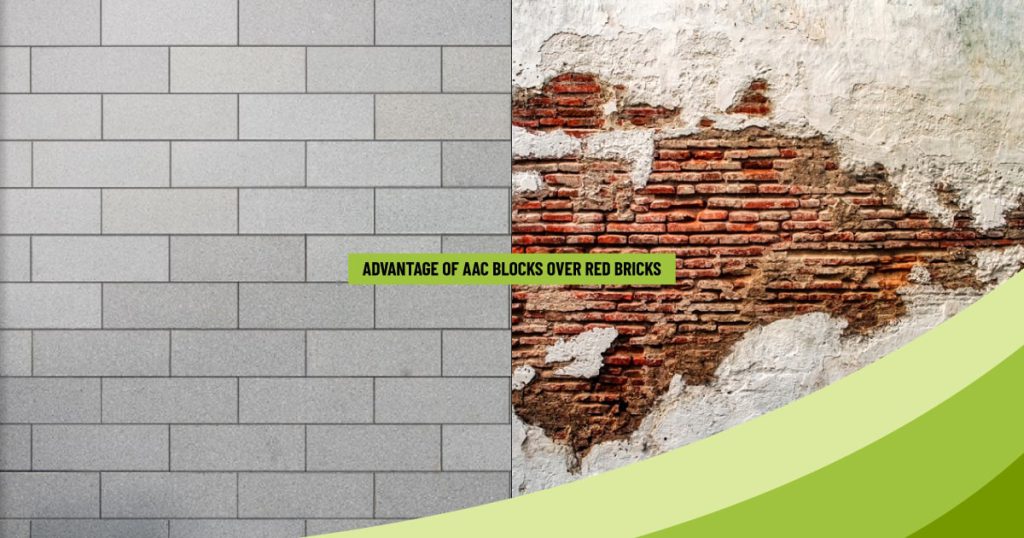
AAC (Autoclaved Aerated Concrete) blocks offer several advantages over traditional red bricks, making them a popular choice in modern construction, some of the advantage of AAC blocks are listed here:
-
Lightweight
- Reduced Load: Reduced load is the most significant advantage of AAC blocks. They are significantly lighter than red bricks, reducing the load on structural elements and making them easier to handle and transport. This can lead to lower construction costs and faster building processes.
-
Thermal Insulation
- Energy Efficiency: AAC blocks provide excellent thermal insulation due to their porous structure, helping to maintain indoor temperatures and reduce energy consumption for heating and cooling.
-
Fire Resistance
- Enhanced Safety: AAC blocks have high fire resistance compared to red bricks. They can withstand high temperatures and provide better protection in case of fire, improving the safety of buildings.
-
Sound Insulation
- Noise Reduction: The acoustic properties of AAC blocks offer superior sound insulation, contributing to quieter indoor environments and reducing noise pollution.
-
Construction Speed
- Faster Building: Due to their lightweight nature and larger size compared to red bricks, AAC blocks accelerate the construction process, allowing for quicker wall erection and reduced labor costs.
-
Environmental Impact
- Sustainability: AAC blocks are produced using a more environmentally friendly process compared to traditional red bricks, which often require significant amounts of energy and natural resources. AAC blocks also contribute to better energy efficiency in buildings.
-
Cost Efficiency
- Reduced Costs: While the initial cost of AAC blocks might be higher than red bricks, their lightweight nature and faster installation can lead to overall cost savings in labor and structural requirements.
-
Durability
- Longevity: AAC blocks have good resistance to weathering, termites, and moisture, contributing to their durability and reducing maintenance needs over time.
In summary, Ascolite AAC blocks offer advantages in terms of weight, insulation, fire resistance, soundproofing, and construction efficiency, making them a modern, cost-effective, and sustainable choice for various building applications
FAQ:
Q.1 Which offers better long-term durability: AAC blocks or red bricks?
When comparing AAC blocks vs red bricks for durability, both materials perform well when used with proper construction practices. Red bricks are known for their long-standing use in traditional construction. AAC blocks, however, are engineered as modern building materials with added benefits such as resistance to termites, mold growth, and fire. With correct installation and quality masonry mortars, AAC blocks retain their strength over time and help minimize issues like efflorescence, surface cracks, and moisture-related damage—making them a durable and reliable solution for long-term use.
Q.2 Are AAC blocks a complete alternative to red bricks in modern construction?
Yes, AAC blocks are increasingly being used as a practical replacement for red bricks in many construction applications. In today’s residential, commercial, and high-rise projects, AAC blocks are preferred due to their lightweight nature, thermal insulation properties, and faster construction speed. While red bricks still serve specific traditional needs, the growing adoption of AAC blocks across India highlights their capability to meet modern structural, efficiency, and sustainability requirements.
Q.3 How much lighter are AAC blocks compared to red bricks, and why does it matter?
One of the key AAC block advantages is weight reduction. AAC blocks are typically three to four times lighter than conventional red bricks, making them one of the most efficient lightweight blocks used in construction today. This lower weight reduces the overall dead load on the building, allowing for optimized foundation design, easier handling on-site, and faster construction progress. The reduced structural load can also contribute to material savings and improved project efficiency.


