




























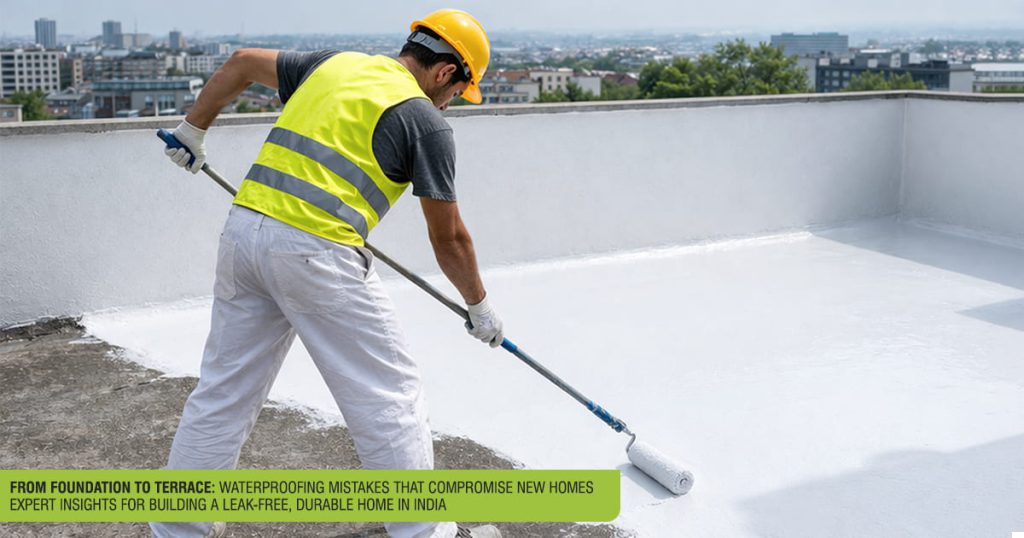
From Foundation to Terrace: Waterproofing Mistakes That Compromise New Homes
March 30, 2026
Waterproofing is one of the most critical yet underestimated aspects of home construction. While homeowners often focus on design, finishes, and structural strength, improper or neglected waterproofing can silently compromise a building’s durability, safety, and indoor health. This guide highlights the most common waterproofing mistakes observed on Indian construction sites—and how to avoid them.
Given India’s climatic diversity—intense monsoons, coastal humidity, extreme heat, and fluctuating temperatures—waterproofing in home construction is not optional; it is essential. Even small lapses during construction can result in chronic seepage, damp walls, mold growth, and expensive repairs later.
Industry data shows that preventive waterproofing during construction accounts for barely 2–3% of total project cost, whereas corrective waterproofing after damage can cost several times more. However, waterproofing delivers results only when done correctly, using the right materials, expert application, and proper planning.
Why Waterproofing Matters During New Home Construction
Waterproofing protects:
- Structural integrity of the building
- Indoor air quality and occupant health
- Electrical systems from moisture-induced hazards
- Long-term property value and maintenance costs
Unchecked water ingress leads to mold, mildew, corrosion of reinforcement steel, plaster failure, paint peeling, and weakening of load-bearing components. These issues often remain hidden until the damage becomes severe.
The best time to waterproof is during construction—not after leaks appear.
Common Waterproofing Mistakes and How to Avoid Them
-
Treating Waterproofing as an Afterthought
One of the most frequent mistakes is delaying waterproofing decisions until construction is complete. Waterproofing should be integrated at the design and planning stage, not added as a patchwork solution later.
Architects and engineers must identify vulnerable zones—roofs, terraces, basements, wet areas, exterior walls, and foundations—and plan suitable waterproofing systems in advance. Early integration ensures compatibility with structural detailing and avoids rework.
-
Using Incorrect or Incompatible Waterproofing Materials
Not all waterproofing chemicals perform the same function. A single product cannot address every exposure condition.
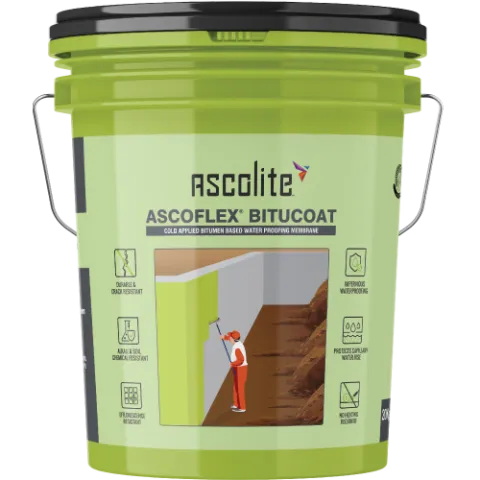
- Basements and foundations require Elastomeric membranes & crystalline waterproofing systems to counter hydrostatic pressure
- Bathrooms, balconies, and utility areas need flexible waterproofing membranes to handle continuous water exposure
- Roofs and terraces demand UV-resistant elastomeric or polyurethane-based coatings
- External walls require breathable waterproof coatings to prevent dampness without trapping moisture
Using mismatched materials leads to premature failure—even if application quality is good.
-
Relying on Local Recommendations Instead of Technical Expertise
Many homeowners select waterproofing products based on local supplier advice or price considerations. This often results in incorrect product selection for the substrate, exposure condition, or climate zone.
Waterproofing is a system-based solution, not just a product purchase. Consulting waterproofing specialists or manufacturers with technical support ensures the right combination of primers, membranes, admixtures, and sealants.
-
Poor Surface Preparation and Application Practices
Even the best waterproofing chemical will fail if applied on an improperly prepared surface.
Professionally executed waterproofing follows these critical steps:
- Thorough surface cleaning to remove dust, laitance, oil, and loose particles
- Crack identification and repair using compatible repair mortars or sealants
- Application of primer to enhance adhesion
- Uniform application of waterproofing layers using recommended tools
- Allowing adequate curing time before exposure to moisture
Skipping or rushing these steps is a major cause of waterproofing failure.
-
Using Untrained or Unskilled workforce
Waterproofing is a specialized application—not a routine masonry task. Untrained work force often applies incorrect thickness, ignores curing cycles, or mishandles materials.
Certified applicators follow manufacturer guidelines, understand site conditions, and ensure continuity across joints, corners, and transitions—areas where most leaks originate.
-
Ignoring Expansion Joints and Movement Zones
Buildings expand and contract due to temperature variations. Expansion joints are designed to absorb this movement.
Failure to waterproof expansion joints properly results in cracking and water ingress. These joints must be treated with flexible sealants and compatible waterproofing systems that accommodate movement without failure.
-
Poor Drainage Planning and Incorrect Slopes
Standing water is the enemy of any structure. Inadequate slopes on terraces, balconies, and podiums cause water stagnation, accelerating waterproofing degradation.
Effective waterproofing must be supported by:
- Proper roof slopes
- Adequately sized drainage outlets
- Clear rainwater downpipes
Without drainage planning, even premium waterproofing systems can fail prematurely.
-
Overlooking Vulnerable and Transition Areas
Certain zones are consistently neglected during waterproofing:
- Wall–floor junctions
- Pipe entry points
- Terrace gardens
- Parapet walls
These transition points require additional treatment using Pipecollar, Taperoll, Glass fiber mesh or extra coating layers to ensure continuity and leak resistance.
Maintenance and Periodic Inspections
Waterproofing is long-term protection, but it is not maintenance-free.
Recommended best practices:
- Annual inspection for cracks, damp patches, or coating wear
- Immediate repair of minor defects before escalation
- Reapplication of coatings in high-exposure zones as per product lifecycle
Preventive maintenance significantly extends waterproofing performance.
Building Smarter with the Right Waterproofing Approach
Effective waterproofing during construction protects structural strength, enhances indoor comfort, improves health outcomes, and reduces lifecycle costs. Avoiding common waterproofing mistakes—through proper planning, expert material selection, skilled application, and maintenance—ensures a leak-free home for decades.
FAQs:
- When is the best time to waterproof a house?
During construction itself. Preventive waterproofing is more effective and economical than post-leak repairs. - Which areas of a house need waterproofing the most?
Roofs, Terraces, Basements, Bathrooms, Balconies, Exterior walls, Foundations, Underground water tanks & overhead water tanks. - How long does waterproofing last?
With correct material selection and application, modern waterproofing systems can last 10–12 years or more. - Can waterproofing be done in all weather conditions?
Dry weather with moderate temperatures is ideal. Avoid application during rain or high humidity. - Is waterproofing necessary even if the structure looks strong?
Yes. Structural strength alone does not prevent moisture ingress or long-term deterioration.


