




























Benefits of Using Epoxy Grout for Floor & Wall Tiles
March 6, 2026
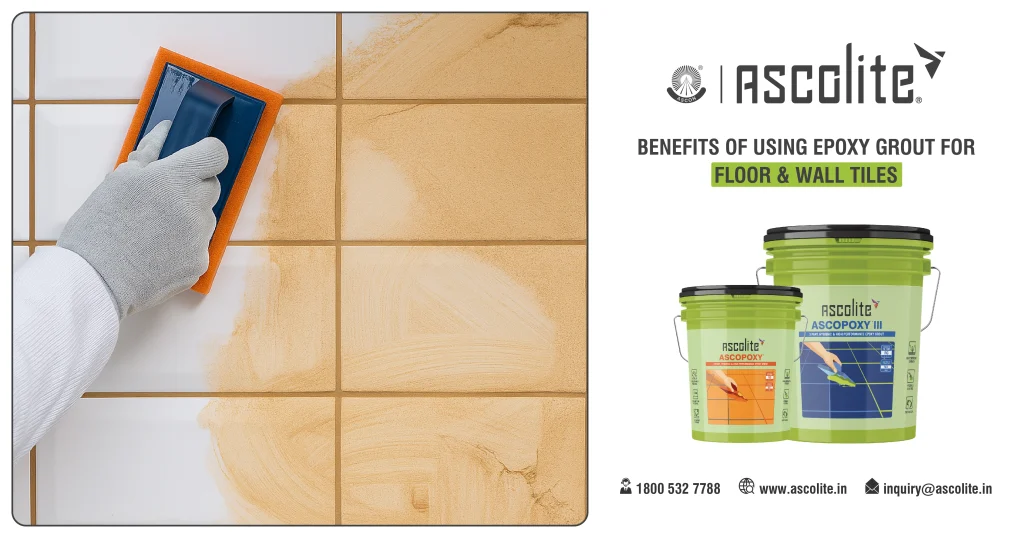
Choosing the right grout is a vital decision in tile installation, whether you’re laying tiles on floors or walls. Among the available options, epoxy grout has emerged as a superior solution, especially in demanding environments found in homes and commercial spaces across India. In this article, we explore the advantages of using epoxy grout, explain why it’s becoming the preferred choice for modern tiling, and provide practical insights for both builders and homeowners.
Understanding Epoxy Grout
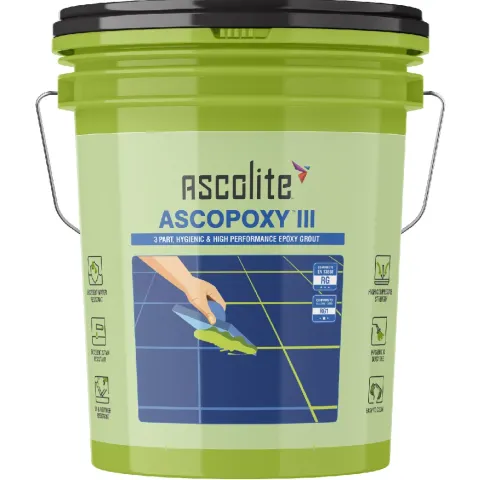
Unlike traditional cementitious grout, epoxy grout is a two-component or a three-component material consisting of resin, hardener and filler. When mixed correctly, these elements form a dense, chemical-resistant compound that bonds strongly to tile edges and fills joints with zero shrinkage.
This makes epoxy grout ideal for high exposure areas such as kitchens, bathrooms, balconies, commercial lobbies, and industrial facilities.
-
Exceptional Waterproofing Performance
One of the most valuable benefits of epoxy grout is its excellent waterproofing capability. The cured material forms a non-porous barrier between tiles, preventing water penetration and eliminating moisture migration into the substrate.
This is especially important in India’s climate zones where monsoon rains and humidity are common. Proper waterproofing protects tile joints from weakening and stops long-term issues like damp walls and efflorescence.
-
Superior Chemical and Stain Resistance
Epoxy grout resists staining and degradation when exposed to aggressive substances such as:
- Detergents and cleaning chemicals
- Kitchen oils and acids
- Salts and alkaline solutions
- Industrial spills
In comparison, cement grouts tend to absorb liquids, leading to discoloration and frequent maintenance. For areas like commercial kitchens, hospitals, and laboratories, this resistance translates to longer service life with minimal upkeep.
-
Enhanced Durability and Strength
Epoxy grout offers significantly higher compressive strength than cement-based alternatives. Once cured, it forms a rigid, yet slightly flexible bond that resists crack formation due to structural movement or thermal expansion.
This makes it suitable for:
- Heavy foot traffic zones
- Outdoor patios
- Industrial and commercial flooring
- High humidity environments
With epoxy grout, tiles stay firmly anchored, reducing the need for repair or re-grouting.
-
Low Maintenance and Easy Cleaning
Another key advantage of this grout type is its low maintenance requirement. The non-porous surface prevents dirt, grime, and mould from settling into joints, making daily cleaning easier and quicker.
For example, bathrooms and kitchen walls that require frequent washing benefit greatly from epoxy grout’s smooth finish. Regular wiping with mild cleaners is usually sufficient to maintain shine and hygiene.
-
Aesthetically Superior Finish
Epoxy grout maintains its color consistency over time, even in high-traffic areas. It doesn’t discolor easily like cement grouts, which can fade or darken due to moisture and dirt absorption.
This benefit is particularly valuable for interior designers and homeowners who seek a long-lasting, attractive look without frequent touch-ups.
-
Ideal for High-Moisture and Wet Areas
In regions with harsh monsoons or high humidity, like coastal cities and northern plains, water infiltrates quickly through porous joints. Epoxy grout effectively blocks this ingress, protecting underlying structures from moisture damage.
This is especially crucial for:
- Shower enclosures
- Bathroom floors and walls
- Balconies and terraces
- Swimming pool perimeters
Here, epoxy grout’s waterproofing and chemical resistance combine to enhance longevity and safety.
-
Reduces Long-Term Cost of Ownership
Although initial installation costs might be higher than traditional grouting materials, the long-term savings are significant:
✔ Fewer repairs
✔ Reduced cleaning and maintenance
✔ Extended tile life
✔ Zero regrouting
In the long run, epoxy grout delivers higher value, particularly for commercial projects where downtime and maintenance costs can be expensive.
Tips for Application Success
To fully reap these benefits, proper preparation and application are crucial:
- Surface Preparation: Ensure joints and tiles are clean, dry, and free of debris.
- Correct Mixing: Follow manufacturer instructions for Resin : Hardener : Filler ratio.
- Application Technique: Use a rubber float to evenly fill joints and avoid voids.
- Cleaning Haze: Remove excess grout before curing.
- Curing Time: Allow full curing (typically 24 hours) before exposing to moisture.
Frequently Asked Questions (FAQs)
- Is epoxy grout suitable for outdoor tiles?
Yes. Due to its waterproof and weather resistant nature, it performs well in exterior installations. - Can epoxy grout be used in swimming pools?
Absolutely. Its impermeability and resistance to pool chemicals make it a preferred choice for wet areas. - Does epoxy grout require sealing after application?
No. Unlike cement grout, it does not require periodic sealing due to its non-porous structure. - How does epoxy grout compare in lifespan to traditional grout?
Epoxy systems typically outperform cementitious options by years, often lasting the lifetime of the tile installation when applied correctly. - Is epoxy grout difficult to clean?
Once cured, it is easy to maintain because it resists staining and surface contamination, requiring only routine cleaning.


