




























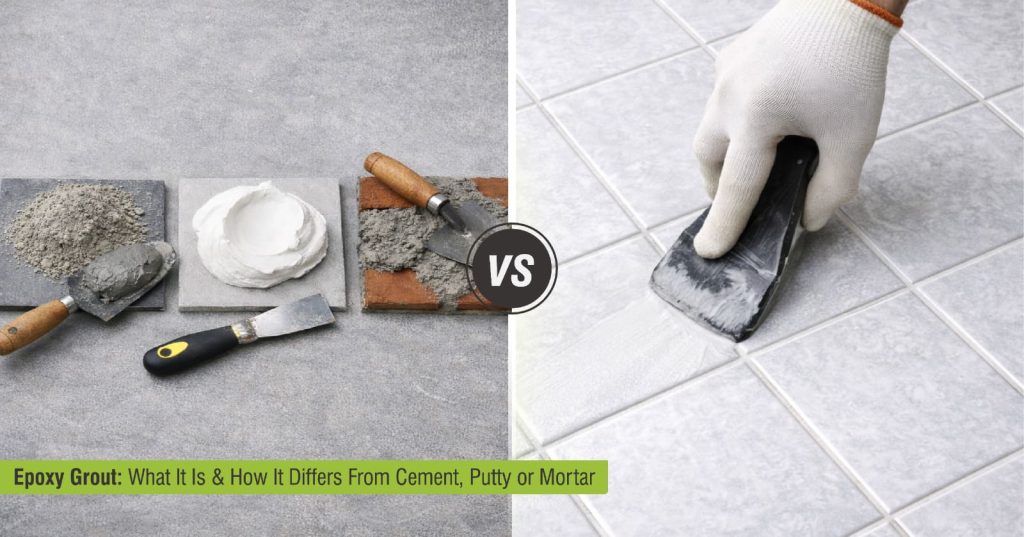
Epoxy Grout: What It Is & How It Differs from Cement, Putty or Mortar
February 6, 2026
Epoxy grout is among the most advanced solutions available for filling tile joints in modern construction. Its adoption is increasing across residential, commercial, and industrial projects in India due to its superior durability, water resistance, and low maintenance requirements. While cement-based grouts have traditionally been used for tile installations, advanced resin-based alternatives now offer significantly better performance in demanding environments.
This blog explains what it is, how it works, and how it differs from commonly used materials such as cement grout, wall putty, and mortar—helping builders, contractors, and homeowners make informed choices for long-lasting tiled surfaces.
What Is Epoxy-Based Tile Grouting?
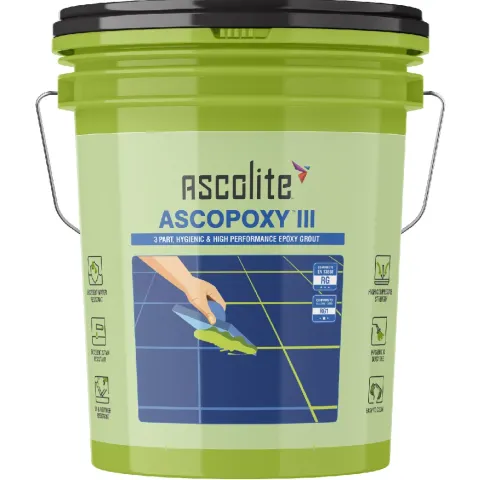
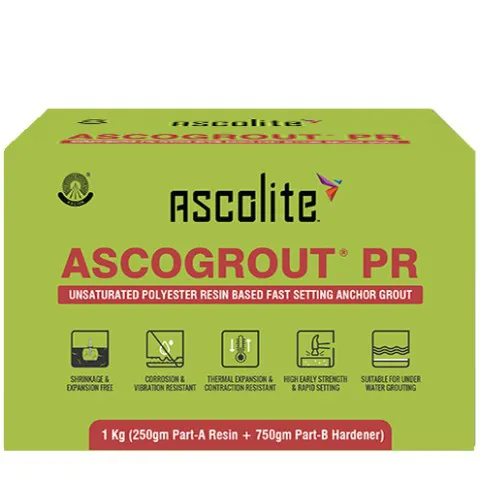
Epoxy grout is a high-performance joint-filling material made using epoxy resins, a hardener, and specially selected fillers. Once mixed, the components react chemically to form a rigid, non-porous, and stain-resistant joint between tiles.
Unlike cementitious options, this grouting system does not rely on water curing. Instead, it hardens through a chemical reaction, resulting in a dense structure that resists moisture ingress, chemical attack, and surface wear. Because of these properties, it is widely used in kitchens, bathrooms, swimming pools, laboratories, hospitals, balconies, and commercial floors where hygiene and durability are critical.
Why Epoxy Grout Is Different
To appreciate the unique qualities of epoxy grout, we need to compare it with other commonly used construction materials:
Epoxy Grout vs Cement Grout
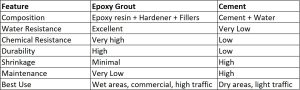
Key Differences:
- Waterproofing: Grout forms a non-porous layer, making it highly waterproof. Cement can absorb water and may require sealing.
- Chemical Resistance: Grout withstands oil, acids, and cleaning chemicals, whereas cement degrades faster under chemical exposure.
- Durability: The epoxy bond is stronger and more flexible, reducing cracking and disintegration.
👉 Best suited for areas like bathrooms, balconies, kitchens, and floors with heavy cleaning.
👉 Cement grout remains a cost-effective choice for dry, low-traffic indoor walls.
Epoxy Grout vs Putty
Tile putty is often used to fill minor surface imperfections before tiling and is not a structural grouting material. In contrast, epoxy grout fills the spaces between tiles to create a strong bond and a finished surface.
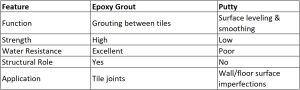
Key Differences:
- Purpose: Epoxy grout is structural and functional; putty is cosmetic.
- Performance: Putty adds smoothness before paint but does not seal joints or prevent water ingress.
👉 Apply tile putty during surface preparation, then use grout for joints.
👉 If using both, ensure surface is primed and cured before grouting
Epoxy Grout vs Mortar
Mortar (typically cement-sand mortar or polymer-modified mortar) is used to set tiles on floors and walls, providing the bedding layer. Epoxy grout, on the other hand, is specifically for filling joints between tiles after they have been set.

Key Differences:
- Sequence: Mortar sets the tile; grout seals the joints afterward.
- Properties: Mortar provides structural support; grout provides joint protection and finish.
👉 A strong mortar base should be laid first, followed by grout to seal and protect.
Ideal Applications for Advanced Tile Grouting
This type of grout is recommended for areas exposed to moisture, chemicals, and frequent cleaning, such as:
- Bathrooms, toilets, and shower areas
- Kitchen floors and backsplashes
- Balconies and terraces
- Swimming pools and spas
- Commercial kitchens, hospitals, and laboratories
- High-traffic commercial and industrial floors
Using a high-performance grout in these zones significantly improves service life and reduces long-term maintenance.
Advantages of Epoxy Grout
- High Waterproofing: Blocks water penetration and staining
- Chemical Resistance: Withstands detergents, acids, salts
- Stain Proof: Maintains appearance longer than cement grout
- Crack Resistance: Lower shrinkage and better flexibility
- Low Maintenance: Does not need regular sealing or frequent cleaning
- Longevity: Longer service life in demanding environments
These features make it especially valuable in India’s wide range of climatic conditions—from monsoon-heavy coastal regions to dusty, arid interiors.
How to Apply Epoxy Grout (Best Practices)
- Surface Preparation: Remove dust, residue, and uneven spots
- Mixing: Follow precise resin-to-hardener ratios
- Application: Use a rubber float for even filling of joints
- Cleaning: Wipe off excess grout before curing
- Curing: Allow full cure time as per manufacturer (usually 24–48 hours)
👉 For perfect application, always follow manufacturer guidelines and consider professional installers for larger, complex surfaces.
Common Mistakes When Using Epoxy Grout
- Applying on dirty or wet surfaces
- Incorrect mixing ratios
- Rushing the curing process
- Using tools that leave residues
- Not removing haze after curing
Avoiding these mistakes ensures optimal performance and longevity of the grout.
Frequently Asked Questions (FAQs)
- Is epoxy grout suitable for outdoor tiles?
Yes. it’s waterproof and chemical-resistant properties make it ideal for outdoor exposure, including balconies, terraces, and paving stones. - How long does epoxy grout last compared to cement?
It typically lasts significantly longer than cement grout due to its high resistance to water, chemicals, and wear. - Can epoxy grout be used in swimming pools?
Absolutely. Its impermeability and resistance to pool chemicals make it perfect for pool tiles. - Does epoxy grout resist staining?
Yes. it is highly stain-resistant and does not absorb liquids like cement grout. - Is epoxy grout difficult to clean?
No. While it requires proper initial cleaning after application, cured grout remains easy to maintain due to its smooth, non-porous surface.


